

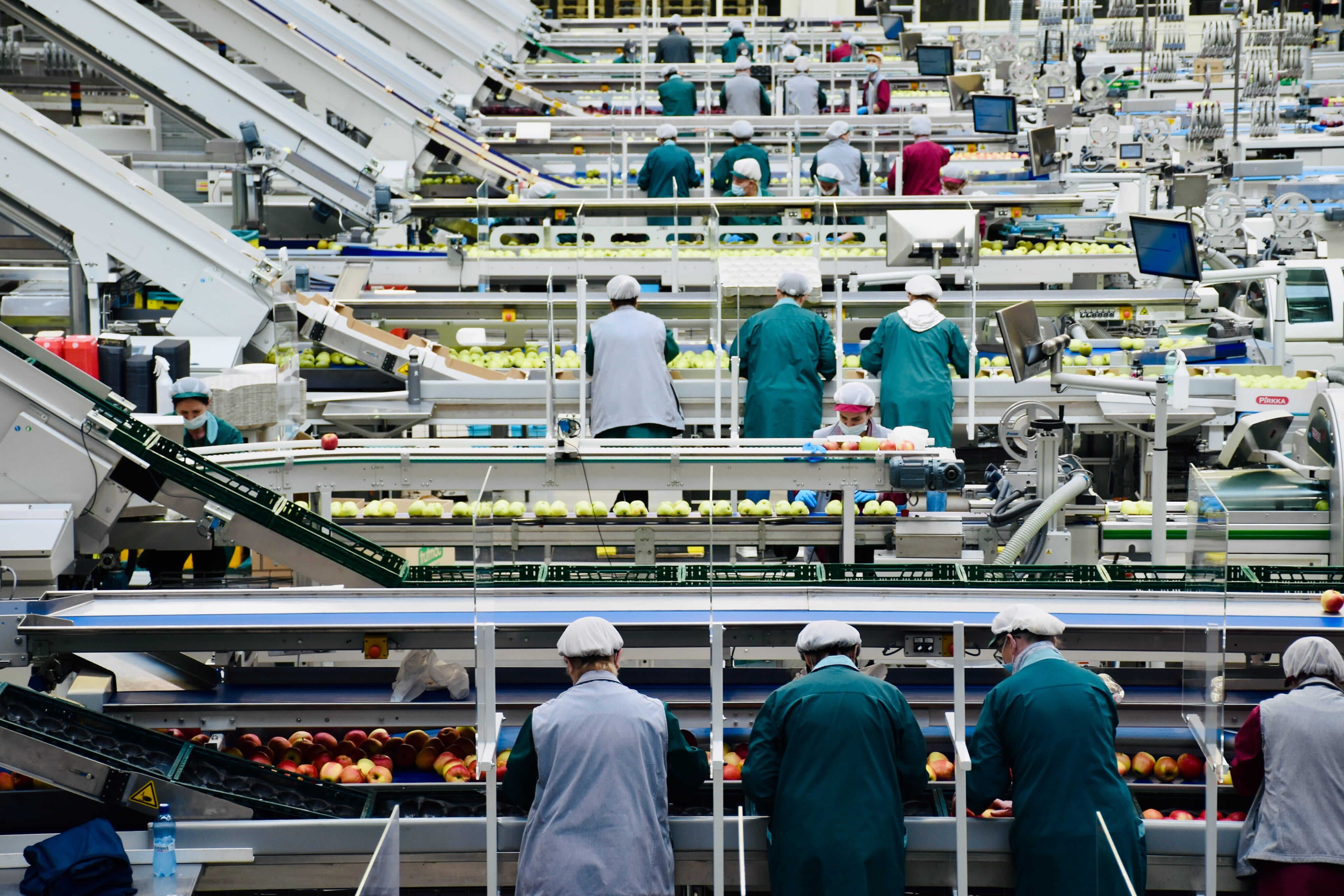
For a manufacturing business running on tight production schedules, any disruption to the floor has a cost. At Frutta, that disruption was happening every week and it came from HR.
Machine operators, lab technicians, and QA testers who needed to submit a leave application, raise a loan request, or access a payslip had one option: leave their workstation, walk to the HR office, and wait. For frontline staff in the middle of a production shift, that meant downtime on the line and delays in quality control processes that could not simply pause.
The HR team on the other end was equally constrained. A significant portion of their working week went to manually processing routine requests that required no specialist judgment: logging leave applications, verifying reimbursement submissions, distributing payslips, fielding calls about policy documents. Strategic HR work, performance planning, and workforce development were consistently pushed aside.
The deeper issue was one of access. Office staff could manage some requests informally, but the majority of Frutta's workforce had no direct channel to HR services at all. There were no digital payslips, no self-appraisal tools, no way for an employee to check their leave balance without asking someone else to look it up.
The result was a workforce that felt administratively invisible, and an HR team spending its time on tasks a well-configured system should handle automatically.
Frutta needed an HR platform that could extend full self-service functionality to frontline manufacturing staff, including machine operators and lab technicians on active production shifts, without requiring them to leave their workstations.
Frutta implemented SoftSUITE's Employee Self-Service module, with the goal of giving every employee, regardless of their role or location in the facility, direct access to the HR functions they needed without routing through the HR office.
The implementation started with configuration, not deployment. The HR team used the platform to define the organisation's rules first: leave policies, loan eligibility, shift structures, resumption and closing times, and appraisal cycles. Performance criteria and evaluation periods were set up in the Performance Management module simultaneously, so self-appraisal functionality was ready from day one.
Once employee records were loaded and the system went live, the change was immediate. Frontline staff could now submit leave applications, raise loan and reimbursement requests, and log travel requests directly from a mobile device or workstation terminal, without leaving their post. Payslips and policy documents became instantly accessible on demand. Clock-in and clock-out moved to a digital format compatible with both mobile and on-site terminals.
Performance management followed the same logic. Employees could complete self-appraisals, review their own KPIs, and where applicable, provide peer evaluations, all within the same platform. HR no longer needed to chase forms or manually compile appraisal data.
For the HR team, the shift was equally significant. Routine administrative processing dropped sharply, freeing capacity for the workforce development and strategic planning work that had been consistently deferred.